






FSSAI-certified training in Anand equips hospitality professionals with advanced food safety practices, reinforcing industry-wide commitment to hygiene and compliance.
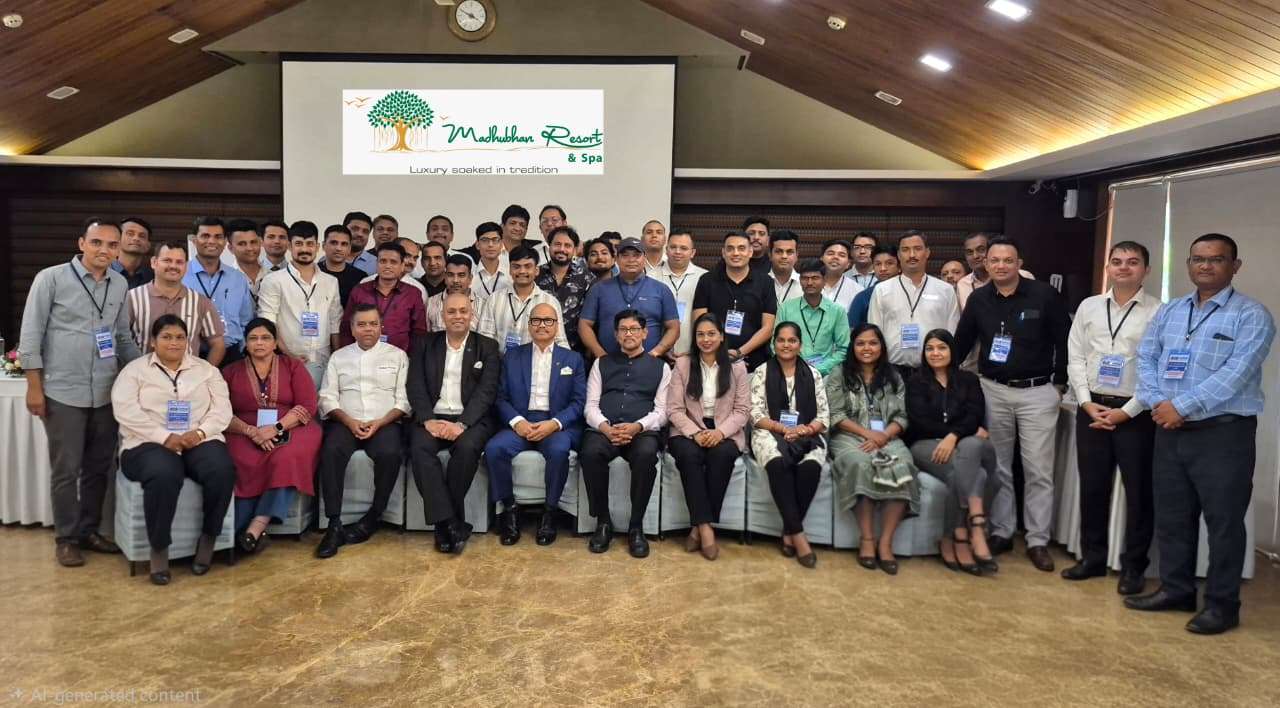
The Hotel and Restaurant Association (Western India) (HRAWI) has continued its efforts to strengthen food safety standards across the hospitality sector by organizing the latest Food Safety Supervisor Training in Advance Catering (FoSTaC) programme at Madhubhan Resort & Spa in Anand, Gujarat. Conducted in collaboration with the Food Safety and Standards Authority of India (FSSAI), the programme brought together hospitality professionals for specialised training focused on food safety, hygiene and operational best practices.
Held on September 28, 2026, the training session was inaugurated by Dr. V. Pasupathy along with Manohar S. Gurung, President, Madhubhan Resort & Spa; Puneet Saigal, General Manager; Chef Rakesh Prasad, Corporate Director of Culinary; and Nimit Goswami, Director of Food & Beverage.

The programme focused on critical aspects of food safety management, including food handling procedures, personal hygiene, sanitation protocols and waste management practices. Conducted by Dr. V. Pasupathy, Trainer at Parikshan FSS Pvt. Ltd., the session aimed to provide participants with practical knowledge and operational insights that can be directly applied within hospitality establishments. A total of 43 hospitality professionals participated in the training.
Speaking on the initiative, Nirav Gandhi, President of HRAWI, emphasised that food safety remains a shared responsibility across the hospitality ecosystem and that continuous training is one of the most effective tools for maintaining high standards. He noted that the programme reflects the industry’s willingness to invest in stronger food safety practices and responsible operational procedures.
Industry observers point out that food safety training has become increasingly important as hospitality businesses face heightened consumer awareness, evolving regulatory requirements and growing expectations regarding hygiene and operational transparency. Programmes such as FoSTaC play a vital role in ensuring that hospitality teams remain updated on the latest standards and compliance requirements.
Manohar S. Gurung highlighted that food safety and hygiene are fundamental to delivering responsible hospitality experiences and stressed that maintaining standards requires ongoing training and awareness. He described food safety not merely as a compliance requirement but as an institutional culture that organisations must actively cultivate to build long-term consumer trust.
The Anand programme forms part of HRAWI’s broader efforts to promote food safety education across Western India. According to the association, it has now trained and certified 4,108 hospitality professionals through FoSTaC and other FSSAI management training initiatives, reflecting a sustained commitment to improving operational standards across hotels and restaurants in the region.
As India’s hospitality industry continues to expand, initiatives such as these are expected to play an increasingly important role in strengthening food safety compliance, improving guest confidence and fostering a culture of excellence across the sector.
Get real time update about this post category directly on your device, subscribe now.