






The 2026 Indian Hospitality Trends & Opportunities Report notes sustained industry growth, rising room rates and an unprecedented expansion of branded hotel supply across emerging markets.
Hotelivate-Savills has released the 2026 Indian Hospitality Trends & Opportunities Report, the 29th edition of its annual assessment of India’s branded hotel industry, providing an in-depth analysis of hotel performance, supply growth and development activity across the country. Based on data from 2,168 hotels comprising 209,180 rooms, the report evaluates operating trends across 20 major hospitality markets and examines factors expected to shape the sector’s future growth trajectory.
According to the report, India’s branded hotel sector maintained strong performance during 2025-26 despite disruptions affecting travel demand. National occupancy remained broadly stable at 68.1 per cent, while the Average Daily Rate (ADR) increased by 6.4 per cent to ₹8,962. Revenue per Available Room (RevPAR) rose by 6.2 per cent to ₹6,099, indicating continued resilience across the hospitality market. Nearly three-quarters of participating hotels reported RevPAR growth during the year, although market-level performance varied significantly across regions.

Among the country’s leading hotel markets, Bengaluru and Hyderabad emerged as top performers, recording RevPAR growth of 14.8 per cent and 13.2 per cent, respectively. New Delhi followed with growth of 10.9 per cent, while Mumbai maintained its position as one of India’s strongest hospitality markets despite a more moderate RevPAR increase of 3.2 per cent. Jaipur also posted healthy gains, whereas Goa and Amritsar experienced declines during the period under review.
A key takeaway from this year’s report is the unprecedented scale of future hotel development. India currently has a proposed branded hotel pipeline of 161,074 rooms over the next five years, equivalent to approximately 77 per cent of the country’s existing branded hotel inventory. Of these, nearly 117,000 rooms are already under active development, reflecting strong investor confidence in the long-term prospects of the hospitality sector.
The report also highlights a significant shift in development activity towards emerging destinations. Nearly 80 per cent of the proposed supply pipeline lies outside Tier-I markets, with almost half concentrated in Tier-III cities. Destinations such as Tirupati and Varanasi are expected to witness particularly rapid growth, with proposed room inventories many times larger than their existing branded supply. The study notes that this trend will make market selection, demand forecasting and development planning increasingly critical for investors and operators.
The theme of this year’s report,”India, À La Carte,” reflects the increasingly diverse nature of opportunities emerging within the hospitality sector. Rather than relying solely on national averages, the report examines market performance across city tiers, hotel segments, administrative zones and major hospitality destinations, highlighting the growing divergence in outcomes across different markets.
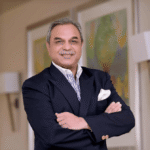
Commenting on the findings, Achin Khanna, Managing Partner, Strategic Advisory, Hotelivate-Savills, said: “Demand is growing, rates are rising and the development pipeline suggests that nobody intends to leave the table hungry. Yet the same helping of new supply could be welcome in one market and difficult to digest in another. An à la carte approach looks increasingly sensible: choose the market, understand its ingredients, and order to suit the appetite.”
The report concludes that while growth opportunities remain significant across India’s hospitality landscape, successful development strategies will increasingly depend on careful market selection, positioning and timing as the industry enters its next phase of expansion.
Get real time update about this post category directly on your device, subscribe now.